No practice section is available for this post yet.
About Attorney & Legal
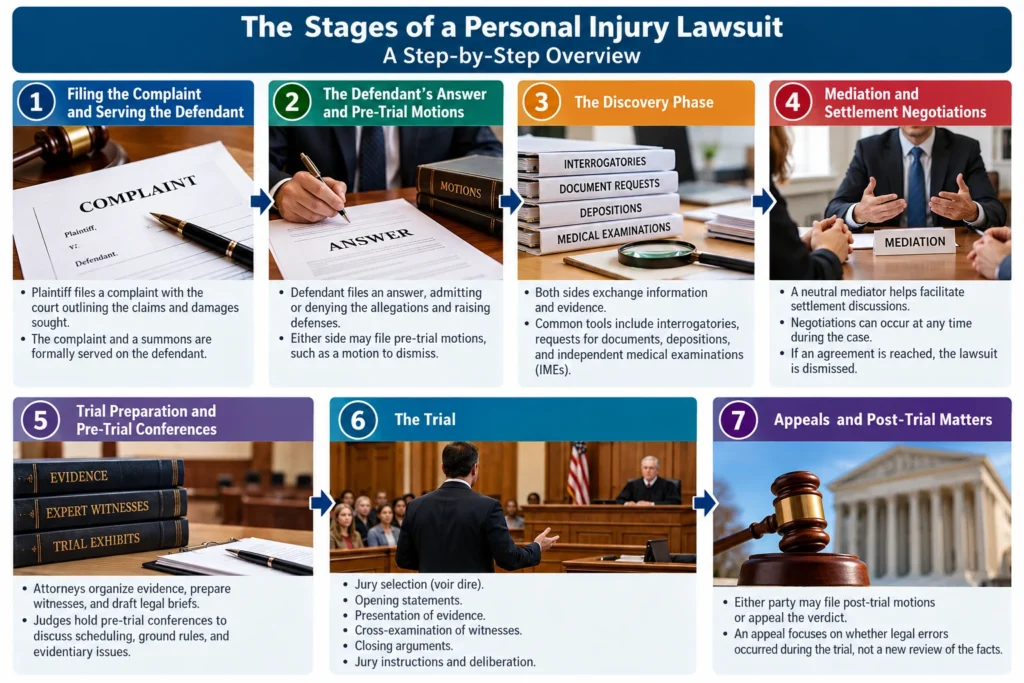
When a personal injury dispute cannot be resolved through insurance claims and direct negotiation, filing a formal lawsuit may become an option. For many plaintiffs, the civil litigation process is unfamiliar and can feel intimidating. Understanding the typical stages of a personal injury lawsuit can help demystify the legal process and set realistic expectations about timelines and procedures.
Every case is unique, and not every lawsuit follows the exact same path. Procedural rules vary significantly by state, local court jurisdiction, and the specific facts of the dispute. However, most civil lawsuits share a general framework. This guide outlines the common phases of a personal injury lawsuit, from the initial filing through potential trial.
1. Filing the Complaint and Serving the Defendant
A lawsuit officially begins when the plaintiff (the injured party) files a legal document known as a complaint or petition with the appropriate court. The complaint outlines the factual basis of the claim, explains why the defendant is allegedly responsible for the injuries, and specifies the types of damages being sought.
Once the complaint is filed, it must be formally “served” on the defendant along with a summons, which is an official notice ordering the defendant to respond. Service of process ensures that the defendant has proper legal notice of the claims against them and an opportunity to defend themselves.
2. The Defendant’s Answer and Pre-Trial Motions
After being served, the defendant has a specific deadline—often set by court rules—to file a formal response, usually called an “answer.” In the answer, the defendant addresses each allegation in the complaint, admitting or denying liability and raising any affirmative defenses.
During the early stages of litigation, attorneys may also file various pre-trial motions. For example, a motion to dismiss might be filed if the defendant believes the complaint fails to state a legally valid claim. These motions help define and narrow the legal issues in dispute.
3. The Discovery Phase
Discovery is often the longest and most detailed phase of a personal injury lawsuit. It is a formal process where both sides exchange information and evidence related to the case. The purpose of discovery is to prevent surprises at trial and ensure both parties have access to relevant facts.
Common tools used during discovery include:
- Interrogatories: Written questions that opposing parties must answer under oath.
- Requests for Production of Documents: Demands for relevant records, such as medical bills, employment records, photographs, and maintenance logs.
- Depositions: Out-of-court testimony given under oath by witnesses, parties, or expert witnesses, recorded by a court reporter.
- Independent Medical Examinations (IMEs): Physical evaluations conducted by a doctor chosen by the defense, depending on local rules and the nature of the injuries.
4. Mediation and Settlement Negotiations
Most civil lawsuits are resolved before reaching a trial. Courts often encourage or even require parties to participate in alternative dispute resolution, such as mediation, before a trial date is scheduled.
During mediation, a neutral third-party mediator helps facilitate communication between the plaintiff and the defendant in an effort to reach a voluntary settlement. Even outside of formal mediation, settlement negotiations can take place at any point during the litigation process. If an agreement is reached, the lawsuit is dismissed, and the claim is resolved.
5. Trial Preparation and Pre-Trial Conferences
If a settlement cannot be reached, the case moves closer to trial. Attorneys will engage in intensive trial preparation, which includes organizing evidence, lining up expert witnesses, preparing trial exhibits, and drafting legal briefs.
Judges typically hold pre-trial conferences with the attorneys to discuss scheduling, establish ground rules for the courtroom, and address any final evidentiary issues. This helps ensure the trial proceeds efficiently.
6. The Trial
During a personal injury trial, both sides present their cases to a judge or a jury. The trial generally follows a structured format:
- Jury Selection (Voir Dire): If it is a jury trial, prospective jurors are questioned to ensure an impartial panel.
- Opening Statements: Each attorney provides an overview of what they expect the evidence to show.
- Presentation of Evidence: The plaintiff presents witnesses and evidence first, followed by the defendant. Cross-examination allows opposing counsel to question witnesses.
- Closing Arguments: Attorneys summarize the evidence and argue why the judge or jury should rule in their favor.
- Jury Instructions and Deliberation: The judge instructs the jury on the applicable law, and the jury deliberates to reach a verdict.
7. Appeals and Post-Trial Matters
A trial verdict does not always mark the absolute end of a legal dispute. Depending on the outcome and trial rulings, either party may have the right to file post-trial motions or appeal the decision to a higher court. An appeal focuses on whether legal errors occurred during the trial, rather than a re-examination of the facts by a new jury.
Final Thoughts
Navigating a personal injury lawsuit involves strict procedural rules, court deadlines, and evidentiary requirements. Because the litigation process can be complex and time-consuming, individuals facing serious legal disputes often consult with a qualified attorney licensed in their jurisdiction to understand their options and rights.
This article provides general educational information and does not constitute legal advice. For advice regarding a specific legal matter, consult a qualified attorney.
Sources and Further Reading
For general consumer information about the legal system and civil trials, visit the American Bar Association Division for Public Education.